Skip to the page
Shore House PipesSouth Jersey shore, season by season
Procedures
RF-1Reference shelf

Flood zones and elevated houses

FEMA flood zones VE and AE are the high-risk areas where the 1-percent-annual-chance flood (the base flood) reaches, VE adding wave action; in those zones plumbing equipment such as water heaters belongs above the flood level, and enclosures under an elevated house need flood openings.

Time: ReferenceWho: YouWhen: Before buying, renovating or replacing equipment

By the Shore House Pipes editors · sources checked October 31, 2026 · how this manual is written
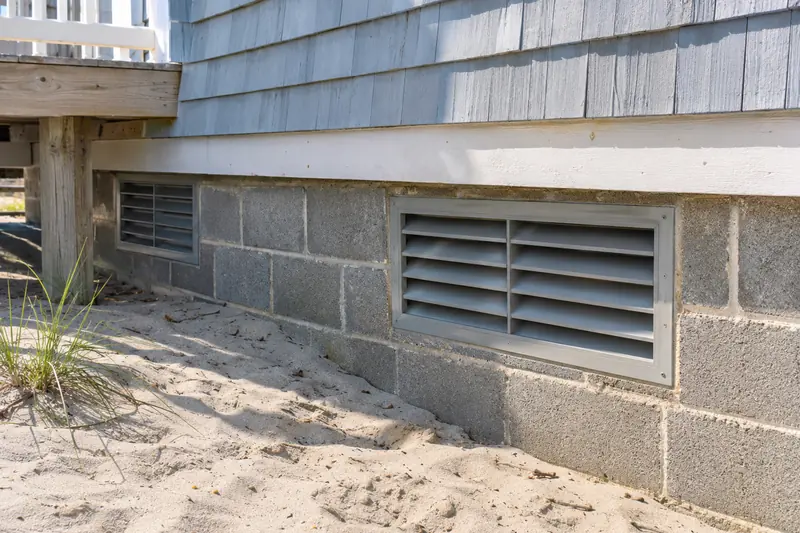
Louvered flood vents set in a block foundation wall under a shingled house
Louvered flood vents set in a block foundation wall under a shingled house. AI-generated picture.

What do the zone letters on the flood map mean?

Zones beginning with A and V are Special Flood Hazard Areas, reached by the base flood, which has a 1-percent chance of happening in any year. V zones on the coast also face waves. Shaded Zone X is moderate risk, between the base flood and the 0.2-percent (500-year) flood; unshaded X is minimal risk. Look up your address on FEMA's Flood Map Service Center.

What is base flood elevation and why does it matter for plumbing?

Base flood elevation (BFE) is the height the base flood is expected to reach. Equipment below it, from water heaters to the main shutoff to a backflow valve's controls, is in the water's path. FEMA's rebuilding guidance says service equipment like a water heater can be raised above the flood elevation and suggests considering at least 1 foot of freeboard above it.

What are flood openings?

Vents in the foundation walls of an enclosed space under an elevated house. FEMA Technical Bulletin 1 says enclosures are allowed only with openings that let floodwater in and out automatically; for non-engineered openings the rule of thumb is 1 square inch of open area for every square foot of enclosed area. Never block them, even in winter.

What should be checked on a plumbing walk-through?

Walk-through checklist:

  1. Water heater height. Is it above the BFE, or in a ground-level garage?
  2. Main shutoff. Can you reach it when the ground floor is wet?
  3. Pipe runs under the house. Insulated, sloped to drain, clear of the flood openings? See WW-4.
  4. Lowest drain. Is there a backwater valve? See AS-3.
  5. Gas meter and lines. Note where they are; any change is for South Jersey Gas or a licensed plumber.

The numbers behind it

FigureWhat it meansSource
1% a yearchance of the base (100-year) floodFEMA
0.2% a yearthe 500-year flood, upper limit of shaded Zone XFEMA
1 sq in per sq ftopen area for non-engineered flood openingsFEMA Technical Bulletin 1
At least 1 footfreeboard to consider above flood elevationFEMA

Watch: The National Flood Insurance Program

From the FEMA YouTube channel. The still picture is stored on this site; nothing loads from YouTube until you press play. The video's advice is the channel's own; where it differs, this page's safety steps come first.

Questions owners ask

Is a house in Zone X safe from flooding?
Lower risk, not no risk. Shaded X can still flood in a 500-year event.
Who checks flood rules for a renovation?
The town's construction office and floodplain manager.
Does flood insurance cover plumbing equipment?
NFIP and private policies list what they cover; equipment below the BFE may be limited. Read the policy.
Can I move a water heater up myself?
No: it is plumbing (and often gas) work under a permit.

Sources for this page

Each source was opened and the cited figure or sentence checked on October 31, 2026. Steps marked PRO are described, not taught: they belong to a licensed plumber or the utility.