Skip to the page
Shore House PipesSouth Jersey shore, season by season
Procedures
CD-1Closing day

Shut off and drain down

To winterize a shore house, close the main water valve, open every faucet from the top floor down, flush the toilets, open the low-point drains and disconnect hoses; blowing the lines out with compressed air and putting antifreeze in traps are a licensed plumber's job.

Time: About 1 hour for your partWho: You + a licensed plumberWhen: Fall, the last visit of the season

By the Shore House Pipes editors · sources checked October 31, 2026 · how this manual is written
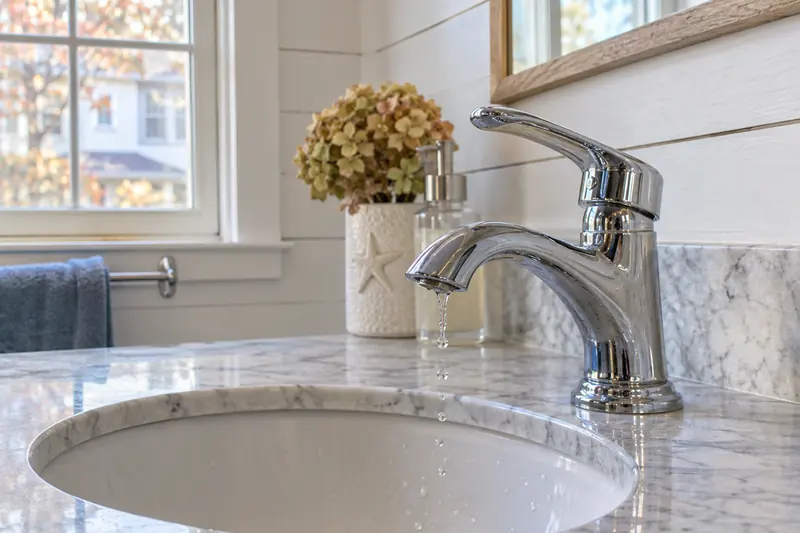
Bathroom faucet left open over a dry basin in a closed-up beach house
Bathroom faucet left open over a dry basin in a closed-up beach house. AI-generated picture.

Bring

  • Flashlight and towels
  • A tag or note for the main valve ("Water off — drained [date]")
  • A bucket for low-point drains

The procedure

  1. Decide heat on or heat off. A house kept heated through winter is closed differently from a fully drained one. Read CD-5 first.
  2. Close the main. Turn the main valve fully off. If it won't close fully, stop and call a plumber; draining a house with a leaking main achieves little.
  3. Water heater first. Shut an electric heater's breaker off before any draining. Leave a gas heater to the plumber. See CD-3.
  4. Open taps top to bottom. Open hot and cold on every faucet and shower, starting at the top floor, so air can get in and water can fall.
  5. Flush every toilet. Hold the handle down to empty as much of the tank as you can.
  6. Open low-point drains. Open any drain valves at the lowest points of the pipe runs, usually under the house or near the main.
  7. Outdoor shower and hoses. Close the shower's indoor shutoff, open its valves and drain, and take hoses off. See CD-4.
  8. Tag and note. Hang the tag on the main and write down what you opened, for the plumber and for spring.
  9. Plumber's step: compressed-air blowout of the lines, antifreeze in traps and toilets, and draining the water heater on gas units are done by a licensed plumber. See CD-2.

Why isn't opening the taps enough?

Water stays in low dips, in traps, in toilet bowls and in the bottom of the water heater. Those pockets freeze and split pipes or crack porcelain. That leftover water is what the plumber's blowout and trap treatment deal with.

Should faucets stay open all winter?

On a fully drained house, yes: open taps let any water left in a pipe expand without pressure building. Note it on the tag so nobody turns the main on in a rush.

Watch: How to find and turn off your water shut-off valve

From the Austin Water YouTube channel. Austin, Texas utility; its curb-box layout and meter-key step are local. Note: The curb valve and meter key shown belong to the water utility; on this page you use the house's own main valve only. The still picture is stored on this site; nothing loads from YouTube until you press play. The video's advice is the channel's own; where it differs, this page's safety steps come first.

Questions owners ask

Can I winterize a shore house myself?
You can do the shutoff and the drain-down. The compressed-air blowout, antifreeze and gas water heater work belong to a licensed plumber.
When should the house be closed?
Before the first hard freeze. Book the plumber early in fall; the season's last weeks fill up.
Do I need to drain a house I'll visit in winter?
Not if you keep the heat on and someone checks it. See CD-5.

Sources for this procedure

Each source was opened and the cited figure or sentence checked on October 31, 2026. Steps marked PRO are described, not taught: they belong to a licensed plumber or the utility.