Skip to the page
Shore House PipesSouth Jersey shore, season by season
Procedures
AS-4After the storm

Generators and carbon monoxide

Run a portable generator outdoors more than 20 feet from windows, doors and vents, as CDC advises, and never inside the house, the garage or the open space under an elevated shore house; keep battery-backed CO alarms near every sleeping area and on every level.

Time: Set up before you need itWho: YouWhen: Any outage, especially after storms

By the Shore House Pipes editors · sources checked October 31, 2026 · how this manual is written
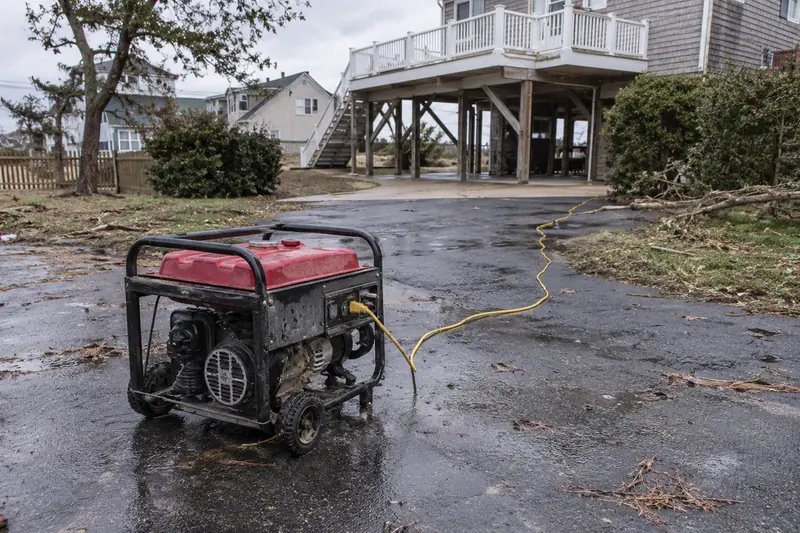
Portable generator on a wet driveway well away from a raised beach house
Portable generator on a wet driveway well away from a raised beach house. AI-generated picture.

Bring

  • Working CO alarms with battery backup
  • Heavy-duty outdoor extension cords
  • A dry, open spot well away from the house

The procedure

  1. Pick the spot before the storm. Outdoors, more than 20 feet from windows, doors and vents, on a dry, open surface.
  2. Never under the house. The space under an elevated house, a garage or a carport traps exhaust even with doors open.
  3. Point the exhaust away. Away from your house and the neighbor's.
  4. Use cords, not house wiring. Run appliance cords from the generator. Connecting a generator to house wiring needs a transfer switch fitted by a licensed electrician.
  5. Check CO alarms. CDC: near every sleeping area; Ready.gov: on every level. Check batteries when the clocks change.
  6. If a CO alarm sounds: everyone out to fresh air first, then call 911 from outside. Don't go back in until responders say it is safe.

Why is the space under an elevated house so risky?

It looks open, but floor, walls, lattice and parked cars trap exhaust, and it sits directly below bedrooms. Carbon monoxide has no smell; you won't notice it building up.

Do rentals need CO alarms?

In New Jersey, the certificate required at a change of occupancy covers smoke and CO alarms. See RF-5.

The numbers behind it

FigureWhat it meansSource
More than 20 feetfrom windows, doors and ventsCDC
Every 5 yearsreplace CO detectors, or per the makerCDC

Watch: How Close is Too Close for Portable Generators?

From the National Institute of Standards and Technology YouTube channel. The still picture is stored on this site; nothing loads from YouTube until you press play. The video's advice is the channel's own; where it differs, this page's safety steps come first.

Questions owners ask

Can I run a generator in the garage with the door open?
No. CDC says never inside the home or garage, even with doors and windows open.
Where should CO alarms go in a shore house?
Near every sleeping area and on every level.
Does a gas water heater need a CO alarm nearby?
Any home with fuel-burning appliances should have CO alarms; NJ rules for rentals require them.

Sources for this procedure

Each source was opened and the cited figure or sentence checked on October 31, 2026. Steps marked PRO are described, not taught: they belong to a licensed plumber or the utility.