Skip to the page
Shore House PipesSouth Jersey shore, season by season
Procedures
CD-2Closing day

What the plumber does at winterizing

When a plumber winterizes a shore house, they shut and drain the system, blow remaining water out of the lines with compressed air, put non-toxic antifreeze into traps and toilets, drain the water heater and leave notes on what was opened; this manual leaves all of those steps to a licensed plumber.

Time: Usually a few hours on siteWho: Licensed plumberWhen: Fall, before the first hard freeze

By the Shore House Pipes editors · sources checked October 31, 2026 · how this manual is written
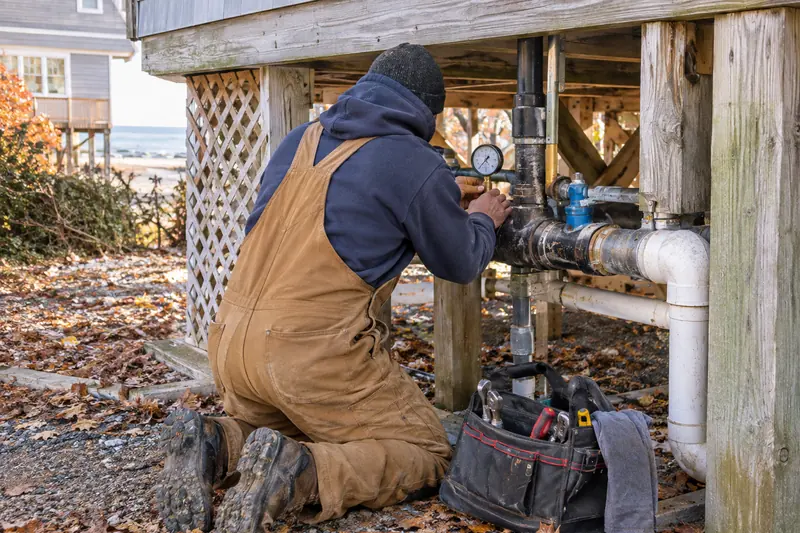
Plumber kneeling at the pipes under an elevated beach house with a gauge on the line
Plumber kneeling at the pipes under an elevated beach house with a gauge on the line. AI-generated picture.

Bring

  • Access for the plumber to the main, the water heater and the space under the house
  • Your list from CD-1

The procedure

  1. Air blowout. The plumber pushes air through the lines at a controlled pressure to clear water from dips and long runs. Too much pressure can damage fixtures and joints, which is why this is a plumber's step.
  2. Traps and toilets. Non-toxic antifreeze goes into sink, tub and floor-drain traps and toilet bowls, so the water seal can't freeze and crack them. It never goes into the drinking-water lines on this manual's advice.
  3. Water heater. The plumber shuts down and drains the heater. On gas units, the gas side is handled only by the plumber or the gas utility.
  4. Appliances. Washer valves, ice makers, dishwashers and any filter housings are drained or bypassed.
  5. Outdoor shower and irrigation. Supply lines to the outdoor shower and the irrigation system are drained or blown out.
  6. Notes and tags. You should get a written list and a tag on the main.

What should you ask the plumber before they start?

Whether the house will be fully drained or kept heated, what will be done to the water heater, whether a water softener or filter needs to be bypassed, and how they will leave the main.

What should the closing notes say?

Which drains and caps were opened, where antifreeze went, the state of the water heater and gas, and anything they saw that needs fixing before spring. Keep the notes with the spring reopening steps in OD-1.

Is a water softener included?

Ask. A softener sitting in a space that freezes can be damaged, so the plumber should drain or protect it along with the rest of the system.

Questions owners ask

Why shouldn't I blow out the lines with my own compressor?
Pressure, fittings and old fixtures make it easy to do damage, and a missed dip still freezes. This manual treats it as a licensed plumber's job.
Is RV antifreeze safe in the drinking lines?
This manual's rule is no antifreeze in drinking-water lines; the plumber uses it only in traps and bowls.
Does the plumber need a key to the house?
Usually. Leave access to the main, the heater and under the house.

Sources for this procedure

  • No outside figures on this page. It describes the plumber's visit so you know what to ask for; the steps are deliberately not written as instructions.

Steps marked PRO are described, not taught: they belong to a licensed plumber or the utility.